Transformation initiatives often begin with optimism.
New vision.
New structure.
New tools.
New frameworks.
New operating models.
At the beginning, everything feels possible.
Then operational reality arrives.
Deadlines remain.
Customers still expect delivery.
Revenue targets still exist.
Legacy systems still break.
Meetings multiply.
Governance expands.
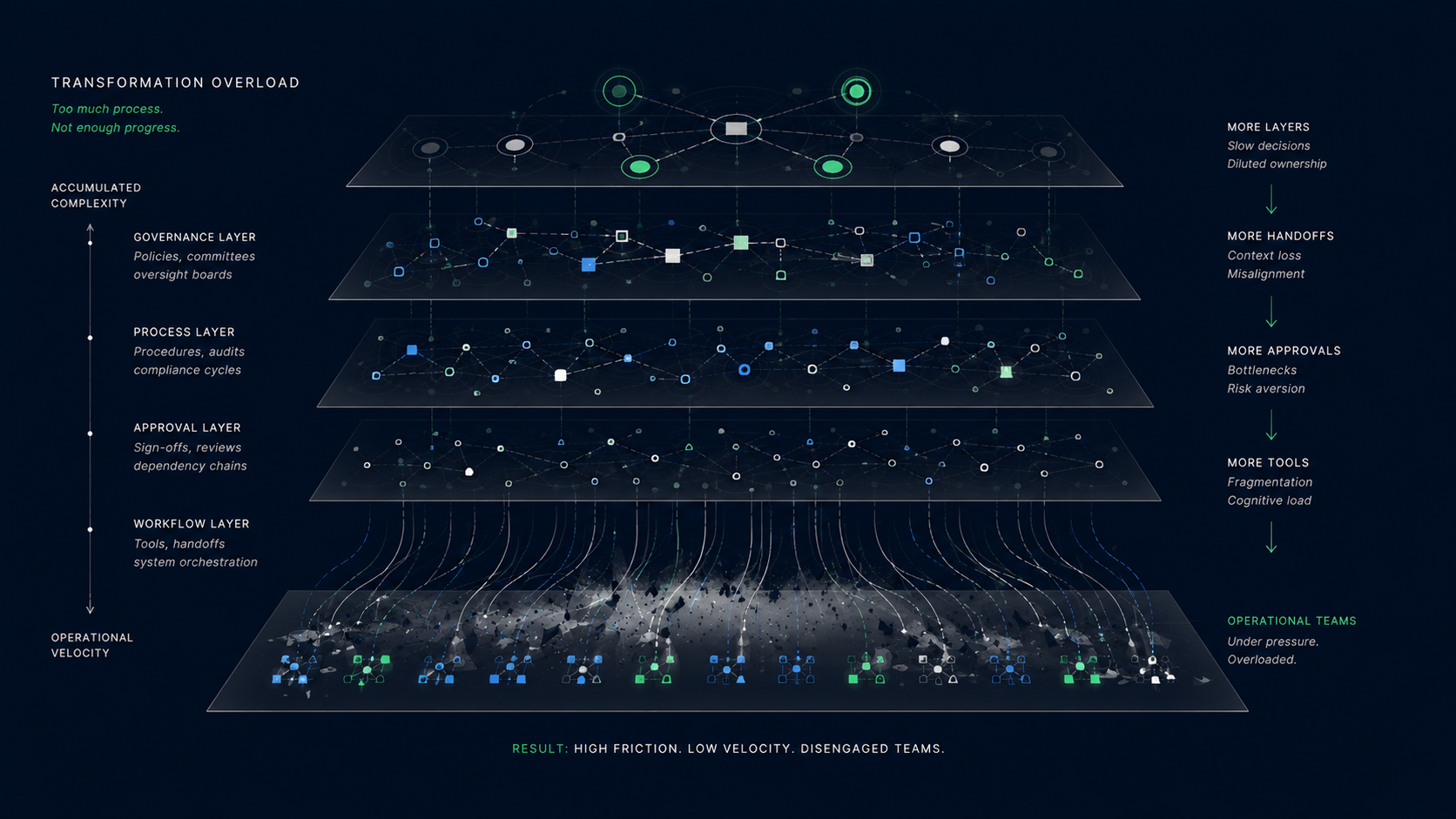
And teams suddenly find themselves navigating both operational pressure and transformation overhead simultaneously.
This is the moment where transformation starts feeling less like progress and more like friction.
And honestly, many organizations underestimate how quickly this perception shift happens.
According to Gartner, change fatigue has become one of the most significant organizational risks in large enterprises, especially during periods of continuous transformation.
That should not surprise anyone.
Many companies are now layering:
- digital transformation
- AI adoption
- restructuring
- cost optimization
- international expansion
- and process redesign on top of already overstretched organizations
Eventually teams begin asking a very rational question:
"Is this actually helping us operate better?"
If the answer remains unclear for too long, skepticism grows naturally.
One of the biggest mistakes organizations make is assuming employees resist transformation because they fear change itself.
In many cases, teams resist because transformation increases operational complexity faster than it reduces operational pain.
More meetings.
More alignment layers.
More process.
More reporting.
More governance.
More terminology.
But not necessarily:
- more clarity
- better prioritization
- or better execution
This is especially dangerous in international organizations.
Different markets often experience transformation very differently depending on:
- organizational maturity
- leadership quality
- local pressure
- resource constraints
- and cultural expectations
A transformation initiative perceived as empowering in one market may feel deeply disruptive somewhere else.
This is why transformation leadership cannot rely exclusively on process design.
It requires operational empathy.
Leaders need to understand:
- how teams actually experience organizational change
- where friction accumulates
- and whether transformation is genuinely improving execution or simply reorganizing complexity
Because ultimately, teams do not care whether transformation sounds impressive.
They care whether it helps them:
- make decisions faster
- collaborate better
- reduce unnecessary friction
- and achieve meaningful outcomes more effectively
If transformation consistently increases cognitive load without improving operational reality, organizations eventually develop transformation fatigue.
And once that happens, even good initiatives begin facing resistance.
Sustainable transformation requires something much harder than launching change initiatives. It requires making organizations feel measurably better to operate inside.